
Intro
This olive undertone guide exists because most single articles on the topic only manage to cover one or two pieces of a much bigger picture, leaving readers to piece together identification, genetics, ethnicity, and product advice from a dozen different sources. Olive undertone is genuinely more complex than the standard warm-cool-neutral framework most beauty content relies on, which is exactly why a scattered approach leaves so many gaps. This guide pulls every major piece together in one place: what olive undertone actually is, how to identify it, where it comes from, and practical olive undertone tips for makeup and skincare. Consider this the starting point, with links throughout to deeper, dedicated resources on each specific subtopic.
Table of Contents
What This Olive Undertone Guide Covers
This complete olive undertone guide is organized to answer the questions people actually have, moving from the basics through to genetics, identification, and practical application. Each section below covers enough to be genuinely useful on its own, while linking out to a more detailed, dedicated article wherever a topic deserves a deeper dive. Reading straight through gives a full picture, while jumping to a specific section works just as well for anyone looking for one particular answer.
What Is Olive Undertone?
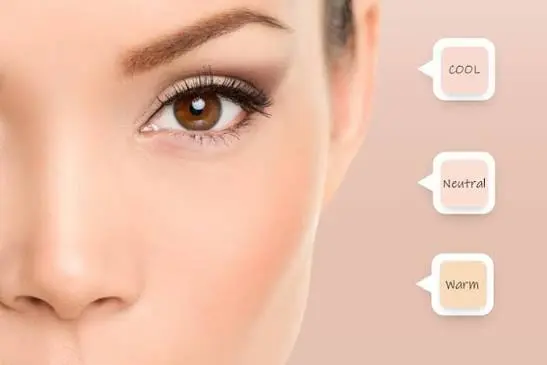
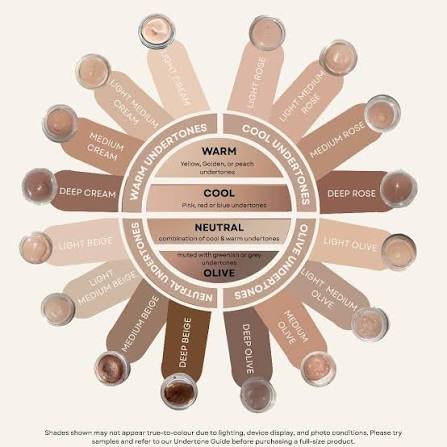
Olive undertone refers to a green or gray cast layered beneath warm or neutral pigment, distinct from the standard warm, cool, and neutral categories most beauty guides rely on. This undertone stays fixed throughout life regardless of tanning, skincare, or season, since it reflects a genetic pigment pattern rather than a surface-level reaction to sun exposure. Olive undertone can appear at nearly any depth, from fair to deep, which is one of the more commonly misunderstood aspects of the trait.
How to Identify Olive Undertone
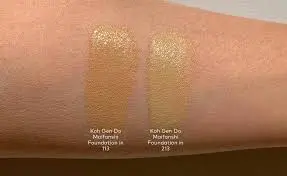
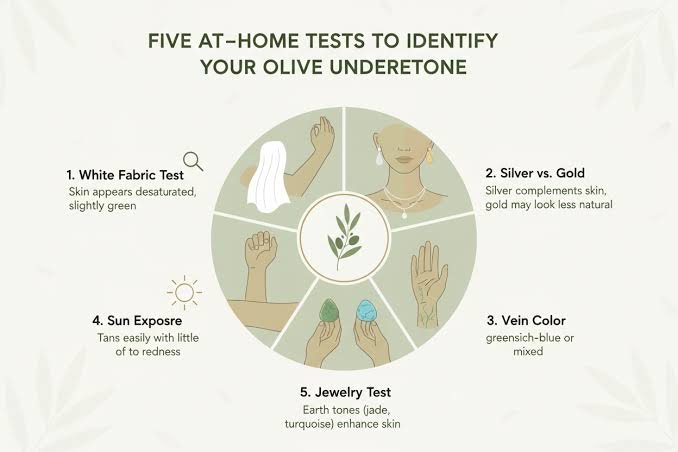
A handful of simple, well-known tests can confirm olive undertone without needing a professional consultation. The vein test checks whether the veins on the inner wrist look green or blue-green in natural daylight, while the jewelry test compares how gold and silver look against the skin, with both looking equally flattering pointing toward olive. The foundation test often reveals the answer fastest in practice, since warm shades tend to oxidize orange and cool shades can look pink or ashy on a true olive undertone, leaving neutral-olive formulas as the most reliable match.
The Science and Genetics Behind Olive Undertone
Olive undertone results from a specific balance of eumelanin and pheomelanin, the two pigments responsible for skin color, combined with how blood vessels and collagen reflect light beneath the surface. This trait follows a polygenic inheritance pattern, meaning multiple genes contribute to the outcome rather than one single gene determining it outright, which explains why two parents without visible olive undertone can still have a child who carries it. The Fitzpatrick Scale, created to measure sun reaction rather than undertone specifically, often classifies olive skin as Type III or Type IV, offering a useful but incomplete reference point for understanding this trait’s biology.
Olive Undertone Across Depths and Ethnicities
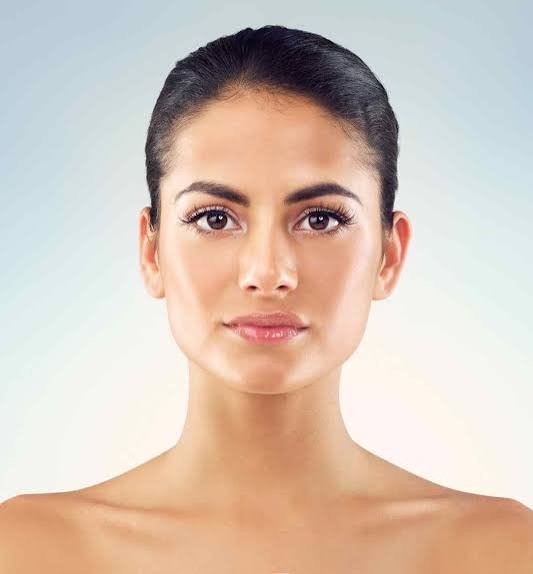
Olive undertone spans a genuinely wide depth range, appearing on fair, medium, and deep skin alike, since undertone and depth are two separate qualities rather than one fixed combination. It also appears across a broad range of ancestries, most commonly among people with Mediterranean, Middle Eastern, South Asian, Latin American, and some North African and Eastern European backgrounds, though the trait can occur in people from almost any region. This wide distribution is part of why treating olive undertone as belonging to one specific look or one specific ethnicity leads to so much confusion in mainstream beauty advice. For a full collection of common questions covering these exact topics in more detail, this olive skin FAQ hub organizes dozens of specific answers by category.
Olive Undertone Tips for Makeup and Skincare
Once olive undertone is confirmed, a few practical olive undertone tips make shopping and daily routines considerably easier across every product category.
Foundation and Base Products
Foundations labeled neutral-olive or golden-olive tend to perform far better than generic neutral shades, since they account for the green-gray cast directly rather than fighting against it. Swatching along the jawline in natural daylight, then waiting several minutes to check for oxidation, remains the most reliable way to confirm an accurate match before purchase.
Blush and Lipstick
Warm-leaning olive undertone tends to suit peach, coral, and terracotta blush along with caramel nudes and brick reds in lipstick, while cool-leaning olive undertone tends to suit mauve, berry, and dusty rose across both categories. Neutral-leaning olive undertone has the most flexibility, pulling comfortably from either family depending on the rest of the look.
Skincare Priorities
Olive skin tends to run oilier than average and shows hyperpigmentation more prominently after acne, irritation, or sun exposure, making daily broad-spectrum SPF and gentle, consistent use of brightening ingredients like vitamin C or niacinamide especially useful. A gentle, non-stripping cleanser paired with light, non-comedogenic moisturizer tends to work better than harsher, oil-focused formulas that can trigger more oil production in response.
Common Myths About Olive Undertone
One persistent myth treats olive undertone as simply a type of tan or deep skin, when in reality it describes undertone rather than depth and can appear on fair skin just as easily as deep skin. Another common misconception assumes olive undertone is rare, when it actually spans a wide range of global populations and is more accurately described as underrepresented in beauty marketing rather than genuinely uncommon. A third myth assumes any neutral-labeled foundation will work automatically, when standard neutral formulas are typically built around a warm-cool balance without accounting for the specific green cast that defines true olive undertone.
Where to Go Deeper: The Rest of This Guide
This olive undertone guide functions as a starting point rather than the final word on any single topic, since each section above connects to a more detailed, dedicated resource covering that subject specifically. Genetics, ethnicity, depth-by-depth breakdowns, identification testing, and product-category guides like foundation, blush, and lipstick each get their own full treatment elsewhere in this broader collection. Treating this page as a map, rather than a complete replacement for those deeper resources, gives the most accurate and thorough understanding of olive undertone overall.
Frequently Asked Questions
What is the best complete olive undertone guide to start with? A guide that covers identification, genetics, depth, ethnicity, and product-specific advice together, like this one, gives a more complete starting point than a single-topic article.
What are the most important olive undertone tips for beginners? Confirming undertone through the vein, jewelry, and foundation tests first, then shopping for neutral-olive or golden-olive labeled products specifically, are the two most useful starting tips.
Does an ultimate guide to olive undertone need to cover genetics? Yes, at least briefly. Understanding that olive undertone is inherited and fixed, rather than something that develops from tanning, clears up a lot of downstream confusion about identification and shopping.
Is olive undertone the same across every ethnicity? No. While it appears most commonly among certain ancestries, olive undertone spans a wide range of depths and backgrounds, and no single ethnicity or look defines it exclusively.
How often should this olive undertone guide be updated with new information? As foundation and beauty brands continue expanding olive-specific shade ranges, revisiting product-specific sections periodically helps keep recommendations current.
Where should I go after reading this guide? Each linked, dedicated article on genetics, identification, depth, and specific product categories offers a deeper dive than any single guide could cover on its own.
Final Thoughts
This olive undertone guide brings together identification, genetics, depth, ethnicity, and practical product advice into one starting point, rather than leaving readers to piece the full picture together from scattered, single-topic articles. Understanding that olive undertone is a fixed, inherited trait, separate from depth and not limited to any single ethnicity, clears up most of the confusion that drives frustrating shopping experiences and inaccurate beauty advice. The olive undertone tips covered here for foundation, blush, lipstick, and skincare offer a practical starting point, while the deeper, dedicated resources linked throughout provide the full detail behind each one. Treating this guide as a map to the rest of the collection, rather than a single final answer, gives the most complete and accurate understanding of olive undertone available.