
Search for common myths about olive undertones, and you will quickly notice that different sources contradict each other, some insisting olive always means warm, others claiming it usually leans cool. That contradiction is itself part of the problem. This guide walks through the most persistent olive undertone myths one at a time, explains where each one came from, and lays out what the evidence actually supports. By the end, you should be able to spot these misconceptions the next time you see them repeated, and know which claims to trust.
Table of Contents
What Are the Most Common Myths About Olive Undertones? (Quick Answer)
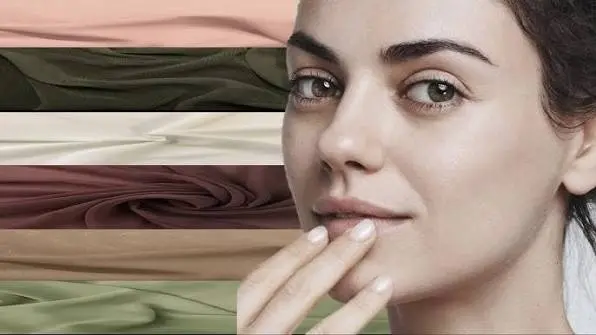
The most common myths about olive undertones are that olive always means warm, that olive skin tone and olive undertone are the same thing, that the vein test reliably confirms it, that it only appears in certain ethnicities, that tanning changes it, that it is simply another word for neutral, that it can only wear muted colors, and that gold jewelry is always the better metal choice. Each of these claims contains a grain of truth but breaks down under closer examination. The sections below unpack each myth individually, along with the more accurate explanation behind it.
| Myth | Actual Fact |
|---|---|
| Olive undertone always means warm | Olive can lean warm, cool, or neutral underneath the green overtone |
| Olive skin tone and olive undertone are the same | Skin tone describes depth; undertone describes the color quality beneath it |
| The vein test confirms an olive undertone | The green pigment skews vein color regardless of actual undertone |
| Olive only belongs to certain ethnicities | It appears across many backgrounds, more widely than commonly assumed |
| Tanning changes your undertone | Tanning changes surface depth, not the underlying undertone |
| Olive is just another word for neutral | Neutral has no added color cast; olive adds a distinct green quality |
| Olive undertones can only wear muted colors | Rich jewel tones often flatter olive undertones just as well |
| Gold jewelry always looks best on olive skin | The better metal depends on whether the base leans warm or cool |
Myth 1: Olive Undertone Always Means Warm Undertone
This is the single most repeated of all the myths about olive undertones, and it is not accurate. Olive describes a greenish or grey-green overtone that sits on the surface of the skin, while warm and cool describe the base underneath it, and these are two separate qualities rather than one automatic package. An olive undertone can lean warm, cool, or neutral depending on the individual, and all three are genuinely common.
Why This Myth Persists
Warm-leaning olive undertones are more visible in mainstream beauty marketing, largely because golden, sun-kissed olive skin photographs well and fits a familiar aesthetic. This visibility creates a feedback loop: warm olive gets featured more often, so warm olive becomes the assumed default, so cool olive gets misdiagnosed or ignored. Some sources have even claimed the opposite extreme, that most olive skin actually leans cool, which shows how unsettled this assumption really is once you look past the marketing.
What the Evidence Actually Shows
The most reliable approach treats warm, cool, and neutral as three genuinely separate categories within olive undertone, each confirmed through combined testing rather than assumption. The jewelry test and sun reaction test tend to be more reliable than relying on skin tone alone, since the green overtone can make a cool base look deceptively similar to a warm one at a glance. If your foundation, jewelry, or color choices have never quite matched advice built around “olive equals warm,” it is worth testing for a cool-olive or neutral-olive base directly rather than assuming the advice is simply wrong for you personally.
Myth 2: Olive Skin Tone and Olive Undertone Are the Same Thing
These two terms get used interchangeably, but they describe different things. Skin tone refers to the depth and overall appearance of the complexion, light, medium, or deep, while undertone refers to the underlying color quality beneath the surface. You can have an olive undertone at almost any skin tone depth, from fair to deep, which is part of why so many people misunderstand the range of who this actually applies to.
This distinction matters most at the extremes. Someone with a fair complexion can have a genuine olive undertone that gets overlooked because “olive” is so often pictured as a medium or tan complexion by default. Recognizing olive undertone as a separate quality from skin tone depth is one of the clearest ways to correct several of the other misconceptions on this list at once.
Myth 3: The Vein Test Can Reliably Confirm an Olive Undertone
The vein test, checking whether wrist veins look blue, green, or a mix of both, is one of the most widely repeated undertone tests in all of beauty content, and it is also one of the least reliable specifically for olive undertones. The greenish pigment that defines an olive complexion is distributed through the skin generally, including the thin skin over the wrist, which pulls the apparent vein color toward green regardless of the actual underlying undertone. This means someone with a genuinely warm-olive base and someone with a genuinely cool-olive base can both look at their wrist and see the same ambiguous blue-green result.
A more accurate approach treats the vein test as a single supporting data point rather than a deciding factor. Pairing it with the jewelry test, the sun reaction test, and a foundation oxidation check gives a far more dependable read than the vein test alone ever can. If your vein test result is inconclusive or seems to contradict everything else about your skin’s behavior, that is a sign to weigh the other tests more heavily rather than defaulting to whatever the veins seem to suggest.
Myth 4: Olive Undertones Only Belong to Mediterranean or Latin Skin
Olive undertone is commonly associated with Mediterranean, Middle Eastern, South Asian, and Latin American heritage, and that association is not wrong, but it is incomplete. Olive undertones also appear across East Asian, Eastern European, and other backgrounds far more often than mainstream beauty marketing tends to represent. Treating olive as a fixed ethnic marker rather than a genuine undertone category excludes a large number of people from getting accurate advice.
This misconception connects to a broader issue with skin classification tools themselves. The Fitzpatrick scale, created in 1975 to measure sun sensitivity rather than undertone, has been criticized for not capturing the specific pigment combinations that produce an olive effect, which has led some researchers and cosmetic scientists to propose newer classification systems built specifically to measure green and red pigment concentration in skin. Whatever tool is used, the underlying point holds: olive undertone is a pigment-based quality that can appear across a much wider range of ethnic backgrounds than the popular image suggests.
Myth 5: Tanning Changes Your Underlying Undertone
A summer tan changes the depth and overtone of the skin, making it appear darker or more golden on the surface, but it does not change the underlying undertone itself. Someone with a genuinely cool-olive undertone remains cool-olive at their base even after months of consistent sun exposure, though the specific shades that flatter them may shift slightly to account for the added depth. This distinction matters most for people who notice their usual foundation or color choices “stop working” seasonally and assume their undertone shifted, when in most cases only the surface tone changed.
If your go-to colors start looking slightly off after a deep tan, the more useful fix is adjusting depth and intensity rather than switching your entire undertone category. A warm-olive person with a summer tan may need a slightly richer version of the same warm palette rather than a cooler one entirely. Retesting with the jewelry or sun reaction test after a significant tan can confirm that the underlying undertone has, in fact, stayed the same.
Myth 6: Olive Undertone Is Just Another Word for Neutral
Older color and undertone systems often treated “neutral” as a catch-all category for anything that did not clearly fit warm or cool, and olive undertone frequently got filed there by default. This is inaccurate. Neutral undertone describes a genuine balance between warm and cool with no additional color quality layered on top, while olive specifically adds a green or grey-green cast that neutral undertone does not have.
Folding olive into neutral is one of the more damaging myths on this list precisely because it hides a real, distinct category behind a vaguer one. People whose foundation, colors, and jewelry choices never quite match generic “neutral” advice are frequently olive rather than neutral, and recognizing that distinction is often the single biggest unlock in getting accurate product recommendations. If neutral advice has never fully worked for you, testing specifically for an olive undertone rather than assuming you are a harder-to-match neutral case is worth doing.
Myth 7: Olive Undertones Can Only Wear Muted, Earthy Colors
Earthy, muted tones do flatter many olive undertones, which is likely why this myth took hold, but it significantly understates the range of colors that actually work. Rich, saturated jewel tones, emerald, sapphire, deep plum, and burgundy among them, often look just as striking on olive undertones as muted earth tones do, sometimes more so. Overly muted or dusty shades can occasionally have the opposite effect, making an olive complexion look flat rather than enhanced.
The more accurate guidance depends on which olive subtype you fall into rather than a blanket muted-tones rule. Warm-olive undertones tend to do well in earthy warms and rich ambers, cool-olive undertones often shine in saturated jewel tones and deep cool colors, and neutral-olive undertones can typically wear both categories successfully. Treating “muted and earthy” as the only safe zone for every olive undertone overlooks a genuinely wide and flattering color range.
Myth 8: Gold Jewelry Always Looks Best on an Olive Undertone
Gold, particularly yellow gold, does flatter many olive undertones, which has led to the common assumption that it is the universally correct choice. In practice, this depends heavily on whether the underlying base leans warm or cool. Warm-olive undertones tend to look most natural in yellow or antique gold, while cool-olive undertones often look cleaner and brighter in silver, white gold, or platinum, and neutral-olive undertones can frequently wear either metal well.
The jewelry test itself, holding both gold and silver against bare skin in natural light, is actually one of the more reliable ways to identify which category you fall into, rather than a test you should already know the answer to. A full breakdown of which metals and gemstones flatter each olive subtype, along with a complete comparison table, is available in our guide to jewelry for olive undertones, and the broader testing methodology behind all of these myths is covered in more depth in our olive undertone FAQ.
Myth 9: A “Neutral” Foundation Label Is Always a Safe Bet for Olive Skin
Neutral-labeled foundations are marketed as the universally safe middle ground for anyone unsure of their undertone, and for olive skin specifically, this is often not true. A standard neutral formula is built to balance warm and cool pigments, but it is rarely formulated to account for the added green cast that defines an olive undertone. This is why so many people with olive skin report that neutral shades still look slightly pink, slightly yellow, or simply “off” despite matching their depth correctly.
The more reliable approach is seeking out foundations labeled specifically “olive,” “neutral-olive,” or “golden-olive” rather than defaulting to generic neutral options. These formulations are built to counteract the green overtone directly, rather than simply splitting the difference between warm and cool. If neutral foundation has never quite worked for you despite trying multiple brands, this mismatch between generic neutral and olive-specific formulation is often the actual explanation.
Myth 10: If Your Undertone Tests Disagree, You Must Be Neutral
When the vein test, jewelry test, and white paper test all point in slightly different directions, it is tempting to conclude that the results average out to neutral. For olive undertones specifically, this conclusion is often wrong, since the green overtone is precisely what causes these tests to disagree with each other in the first place. A genuinely warm-olive or cool-olive person can easily get mixed signals across different tests simply because the overtone is interfering with the reading, not because their undertone is actually balanced.
Rather than defaulting to neutral whenever tests conflict, the more accurate approach is weighting the more reliable tests, the jewelry test and sun reaction test in particular, more heavily than tests known to struggle with olive skin, like the vein test. Genuine neutral-olive undertones do exist, but they should be confirmed through consistent results across multiple reliable tests, not assumed simply because the easier, less reliable tests happened to disagree.
Myth 11: A Photo or Online Quiz Can Instantly Diagnose Your Undertone
Digital color-analysis tools and quick online quizzes are increasingly popular for identifying undertone, and while they can be a useful starting point, treating a single photo or quiz result as a final diagnosis overstates what these tools can actually confirm. Cameras and phone screens adjust exposure, white balance, and color automatically, which means a photo can shift how warm, cool, or green your skin appears without you realizing it. This is especially relevant for olive undertones, since the green overtone is subtle enough that small color shifts from a camera or screen can meaningfully change the reading.
A more reliable approach treats a photo or quiz result as a hypothesis to test rather than a confirmed answer. Photographing yourself in consistent, indirect daylight, without filters or automatic color adjustments, and comparing that result against the jewelry test and sun reaction test in person gives a far more dependable picture. Quizzes and digital tools are genuinely useful for narrowing down possibilities, but the physical tests described throughout this guide remain the more trustworthy final check for olive undertones specifically.
Frequently Asked Questions
What is the biggest myth about olive undertones? The most common myth is that olive undertone always means a warm undertone. In reality, olive describes a green or grey-green overtone that sits separately from the warm-cool base underneath it, and that base can lean warm, cool, or neutral depending on the individual.
Is the vein test accurate for olive skin? Not on its own. The greenish pigment in olive skin affects how veins appear regardless of the actual underlying undertone, which makes the vein test one of the least reliable single methods for this specific undertone category. Combining it with the jewelry test and sun reaction test gives a far more dependable result.
Does tanning change your undertone? No. Tanning changes the surface depth and appearance of the skin, but the underlying undertone itself stays consistent. If your usual colors seem off after a deep tan, adjusting depth and richness is more useful than assuming your undertone changed.
Can only certain ethnicities have olive undertones? No. While olive undertones are commonly associated with Mediterranean, Middle Eastern, South Asian, and Latin American backgrounds, they also appear across East Asian, Eastern European, and other heritages more often than popular representation suggests.
Is olive undertone the same as neutral undertone? No. Neutral undertone is a balance between warm and cool with no additional color cast, while olive undertone specifically adds a green or grey-green quality on top of that warm-cool base. Treating the two as identical is one of the most common misconceptions in this space.
Should olive undertones only wear muted colors? No. While muted, earthy tones flatter many olive undertones, rich jewel tones like emerald, sapphire, and deep plum often work just as well or better, particularly for cool-olive and neutral-olive subtypes.
Is a neutral-labeled foundation always the safest choice for olive skin? Not necessarily. Standard neutral formulas balance warm and cool pigments but rarely account for the green cast in an olive undertone, which is why shades labeled specifically “olive” or “neutral-olive” often perform better.
If my undertone tests give conflicting results, does that mean I’m neutral? Not automatically. Olive skin’s green overtone can cause tests like the vein test to disagree with more reliable methods like the jewelry test, so conflicting results are often a sign to weigh the stronger tests more heavily rather than defaulting to neutral.
Can an online quiz or a single photo confirm my olive undertone? Not reliably on its own. Cameras and screens adjust color and exposure automatically, which can shift how green, warm, or cool your skin appears in a photo. Use a quiz or photo result as a starting hypothesis, then confirm it with the jewelry test and sun reaction test in natural daylight.
Final Thoughts
Nearly every one of these olive undertone myths traces back to the same root problem: treating olive as one simple, uniform category instead of a genuine spectrum with real warm, cool, and neutral variation underneath it. Separating the visible green overtone from the actual undertone underneath clears up most of the confusion in one step, whether the topic is foundation shade, jewelry metal, or color choice. If you are still working through your own testing, combining the jewelry test, sun reaction test, and foundation check will get you a far more reliable answer than relying on any single myth-based rule of thumb.
The common thread across every misconception on this list is a preference for a simple, one-size-fits-all rule over the slightly messier reality that olive undertone is genuinely varied. That variation is not a flaw in the category, and it is exactly why testing properly matters more for olive undertones than for most other undertone types. Once you know which subtype you actually fall into, the rest of the decisions- foundation, jewelry, and color- tend to follow naturally rather than requiring constant guesswork.