Olive skin tone is a skin color with a subtle green or golden-green cast beneath the surface, sitting between warm and cool on the undertone spectrum. It’s not a shade of brightness (like fair, medium, or deep) — it’s an undertone category that can appear in light, medium, or deep depths. People with olive skin often tan easily, rarely burn severely, and can wear both gold and silver jewelry without either looking “off.”
Table of Contents
What Is Olive Skin Tone?
Most articles define olive skin as “skin with a green undertone.” That’s technically correct, but it explains nothing useful.
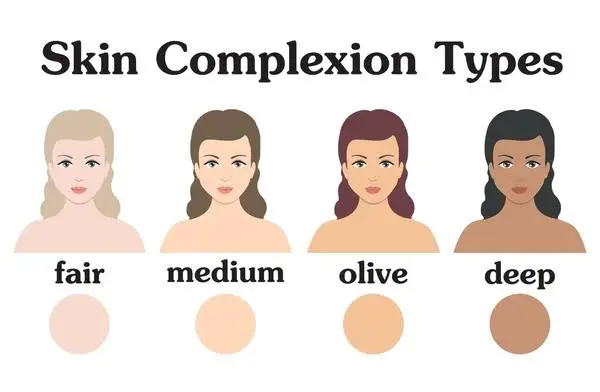
Here’s the part they skip: undertone and depth are two separate things. Depth is how light or dark your skin is. Undertone is the color running underneath that depth — the color that shows up when you hold a white shirt against your neck, or that shifts your foundation shade from “perfect” to “gray” or “orange.”
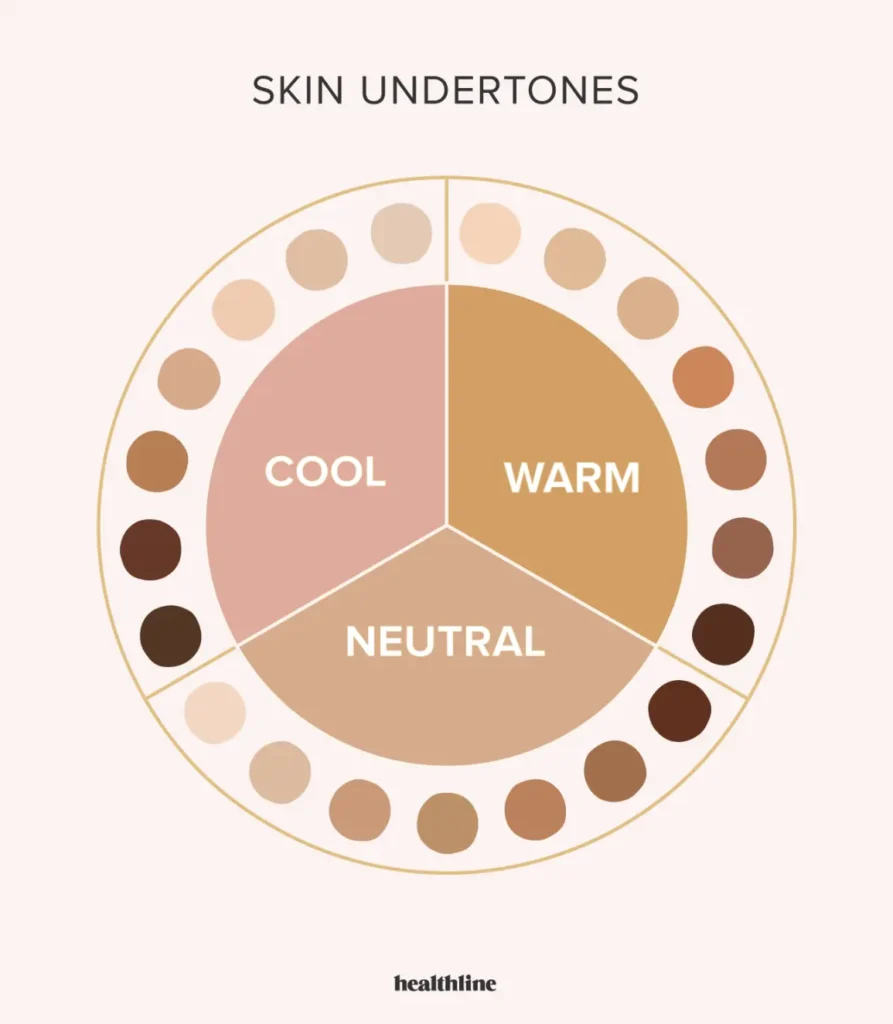
Olive is an undertone. It sits in a strange middle zone: not fully warm (yellow/gold), not fully cool (pink/red), and not perfectly neutral (an even mix). Instead, olive carries a muted green-gold cast, which is why dermatologists and makeup artists both describe it as “neutral-leaning” rather than a category of its own on old-school warm/cool charts.
This is also why olive skin is one of the most mismatched skin tones in foundation aisles. Brands built around a simple warm/cool/neutral system often push olive-skinned people toward shades that look either too peachy or too ashy — because green isn’t on that spectrum at all.
Pro Tip: If your foundation matches on your hand but turns gray or orange on your face after an hour, you likely have an olive undertone the shade wasn’t formulated for.
Why Olive Skin Tone Is Hard to Identify (Even for Professionals)
Three reasons this happens:
- Lighting distorts green undertones more than warm or cool ones. Fluorescent light exaggerates the green cast; warm indoor bulbs mute it almost completely. This is why the same person can look “clearly olive” in a bathroom and “just tan” in a bedroom.
- Olive overlaps with tan skin. Tanning is a reaction to sun exposure. Olive is a baseline undertone that exists whether or not you’ve been in the sun. A fair-skinned person can look tan in summer; an olive-skinned person keeps the green-gold cast year-round, even under long sleeves.
- Depth and undertone get merged in casual conversation. “Medium skin” and “olive skin” are not the same claim. You can be light-skinned and olive-toned, or deep-skinned and olive-toned.
How to Identify Your Olive Skin Tone (Step-by-Step)
Don’t rely on just one test — undertone identification is most accurate when two or three tests agree.
1. The Vein Test: Look at the veins on your inner wrist in natural daylight.
- Blue or purple veins → cool undertone
- Green veins → warm or olive undertone
- A mix, or veins that look olive/teal → likely olive
2. The White Fabric Test: Hold a pure white sheet of paper or fabric against your bare face with no makeup.
- Skin looks yellow → warm
- Skin looks pink/rosy → cool
- Skin looks slightly gray-green or golden-green → olive
3. The Jewelry Test
- Gold looks noticeably better → warm
- Silver looks noticeably better → cool
- Both look equally good, or gold looks “softer” than expected → olive (this is one of olive skin’s defining traits)
4. The Sun Reaction Test
- Burns fast, rarely tans → cool/fair undertone
- Tans quickly, burns rarely → warm or olive undertone
- Tans to a deep bronze-brown without going orange or red → strong olive indicator
5. The Foundation Patch Test Apply a “neutral” or “warm” foundation shade along your jawline in daylight and wait 10 minutes.
- If it oxidizes orange → the shade was too warm for you
- If it turns ashy gray → the shade was too cool
- If it blends in and simply “disappears” → correct olive match
Checklist — You likely have olive skin if:
- [ ] Veins appear green or greenish-blue
- [ ] Both gold and silver jewelry look fine, gold slightly favored
- [ ] You tan easily and rarely burn badly
- [ ] White fabric makes your skin look faintly green-gold, not pink or purely yellow
- [ ] Foundation shades made for “warm” or “cool” skin often look wrong on you
The 3 Types of Olive Skin Tone (With Comparison Chart)
Olive skin isn’t one shade — it spans a full depth range while keeping the same green-gold undertone.
| Type | Depth Description | Common Traits | Closest Foundation Undertone Names |
| Light Olive | Pale to light-medium, but never truly “fair pink” | Faint green cast visible mainly at the jaw and neck; tans quickly in early summer sun | “Warm ivory,” “golden beige” |
| Medium Olive | The most commonly referenced “olive” shade | Clear green-gold cast, tans to a deep bronze, rarely burns | “Olive,” “golden tan,” “neutral warm” |
| Deep Olive | Deep brown base with a green-gold undercurrent | Undertone can be harder to see against depth but shows in warm daylight; very low burn risk | “Deep golden,” “espresso warm” |
Key insight competitors miss: depth can change slightly with sun exposure, but the undertone stays fixed. A light olive person who tans heavily becomes a tanned light-olive, not a medium olive — the underlying green-gold cast doesn’t shift categories.
Olive Skin Tone Around the World: Ethnic & Genetic Background
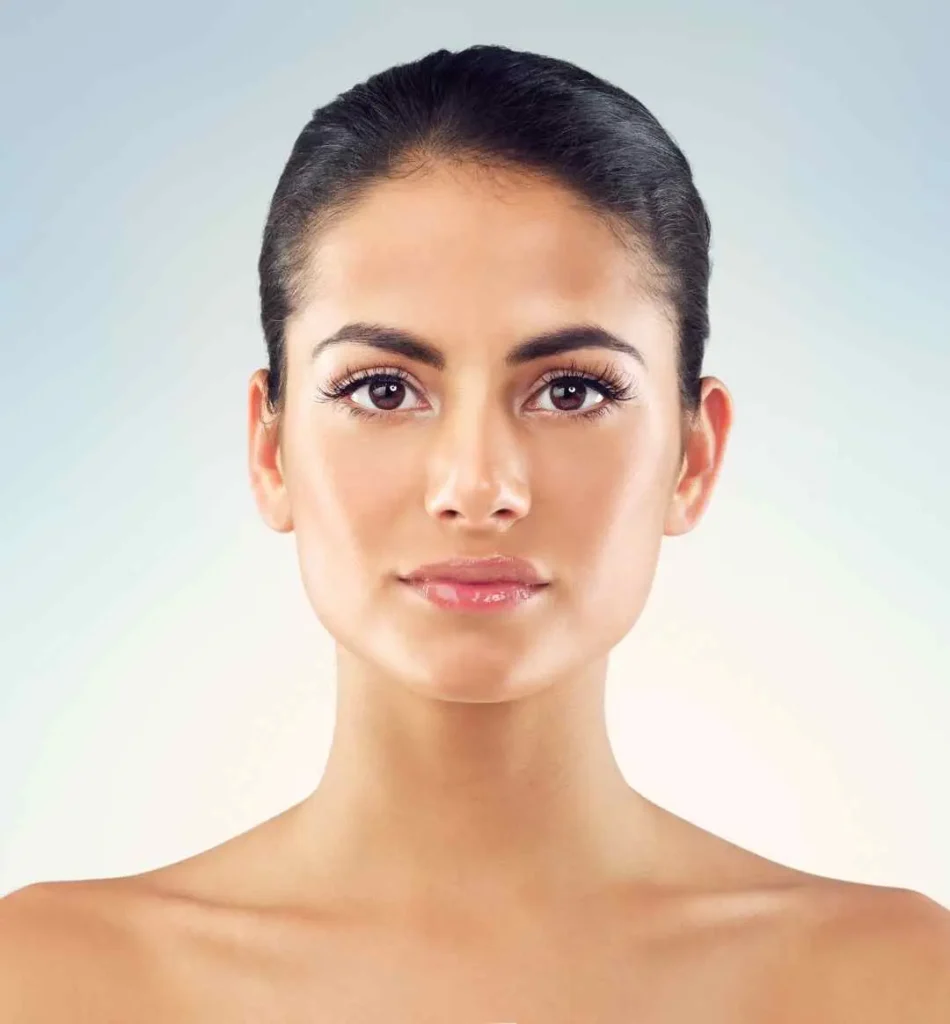
Olive skin appears across many ethnic backgrounds — it is not limited to one region, and no single group “owns” the tone. It’s most commonly associated with:
- Mediterranean populations (Southern Italy, Greece, Southern Spain, Portugal)
- Middle Eastern populations (Levant, Gulf, North Africa)
- Latin American populations, particularly Central America and parts of South America
- South and Southeast Asian populations, including many Filipino skin tones, which frequently combine a warm-to-olive undertone with light-to-medium depth
- Parts of Eastern Europe and the Balkans
This is why “what race has olive skin” doesn’t have one accurate answer — olive is a genetic trait linked to melanin composition and eumelanin/pheomelanin ratios, and it shows up across many populations rather than one ethnicity. Genetics research on skin pigmentation shows undertone is influenced by multiple gene variants, not a single ancestral marker.
Olive Skin Tone Undertones Explained: Warm vs. Cool vs. Neutral vs. Olive
| Undertone | Underlying Color | Vein Color | Jewelry That Flatters | Common Confusion |
| Warm | Yellow, peach, gold | Green | Gold | Confused with olive because both lean yellow-green |
| Cool | Pink, red, blue | Blue/purple | Silver | Rarely confused with olive |
| Neutral | Balanced mix, no dominant cast | Blue-green mix | Both equally | Confused with olive because both wear gold and silver well |
| Olive | Green-gold, muted | Green or teal | Both, gold slightly softer | The most misdiagnosed undertone of all four |
The distinguishing feature: olive undertones physically contain green pigment in a way that warm and neutral undertones don’t. It’s the only undertone where green is a foreground color rather than a side effect of lighting.
Characteristics of Olive Skin Tone
- Sun response: Higher natural melanin activity means olive skin tans more readily and burns less severely than fair skin, though sunburn and UV damage are still possible and sunscreen is still necessary.
- Aging pattern: Olive skin tends to show fine lines later than fair skin due to higher baseline melanin, but is more prone to visible sun spots and uneven pigmentation if sun protection is skipped for years.
- Hyperpigmentation tendency: Olive skin is more prone to post-inflammatory hyperpigmentation (dark marks left after acne, cuts, or irritation) than very fair skin. This is a genuine dermatological pattern, not a myth.
- Texture: No single texture is universal to olive skin — oiliness, dryness, and combination patterns vary by individual, not by undertone.
Warning: Don’t assume olive skin doesn’t need sunscreen because it “tans instead of burns.” Melanin offers some natural protection, but it does not prevent UV damage, premature aging, or skin cancer risk. Dermatologists recommend daily broad-spectrum SPF regardless of undertone or depth.
Fitzpatrick Scale and Olive Skin Tone
The Fitzpatrick scale classifies skin by how it reacts to UV exposure, not by undertone. Olive skin most commonly falls into Type III or Type IV:
| Fitzpatrick Type | Sun Reaction | Where Olive Skin Usually Falls |
| Type III | Sometimes burns mildly, tans to olive | Light olive |
| Type IV | Burns minimally, tans easily to brown | Medium olive |
| Type V | Rarely burns, tans dark easily | Some deep olive |
This scale is used clinically to estimate skin cancer risk and appropriate sun protection — it’s worth knowing your type when discussing skincare with a dermatologist, since olive skin’s “it just tans” reputation can lead people to underestimate real UV risk.
Best Colors for Olive Skin Tone
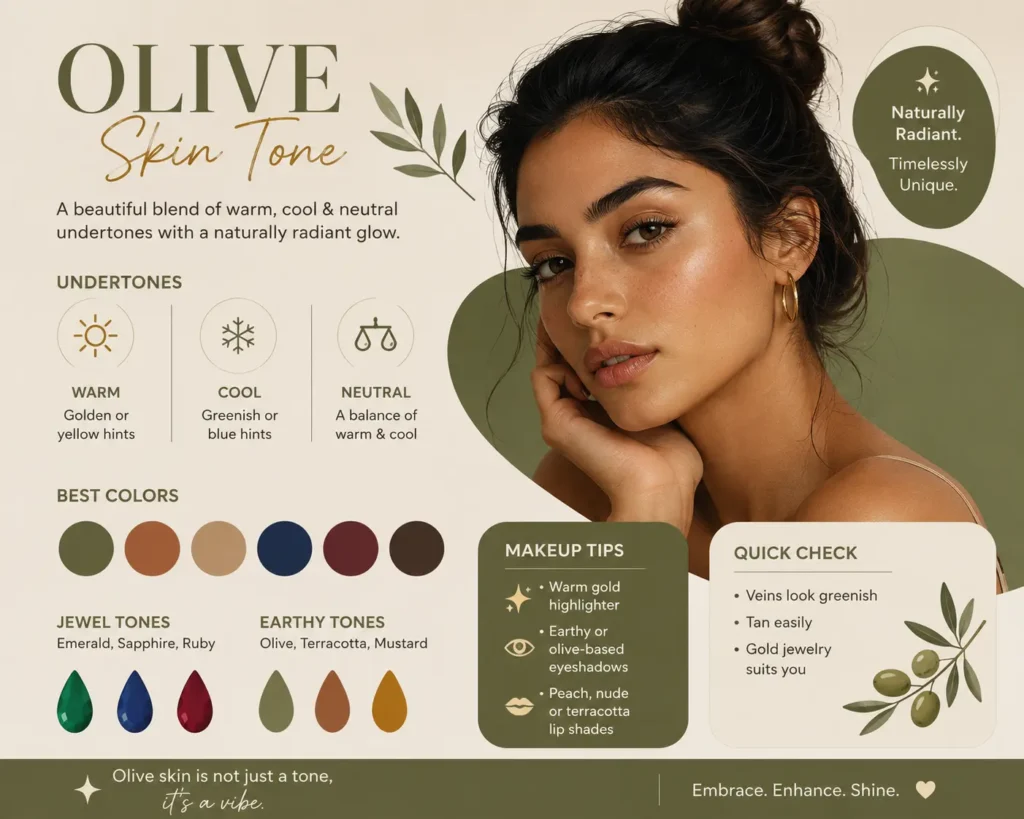
Olive’s green-gold undertone is naturally balanced by colors that either contrast it (jewel tones) or echo its earthy warmth (rich neutrals).
Best clothing colors:
- Jewel tones: emerald, sapphire blue, ruby red, amethyst purple — these contrast the green undertone and make skin look brighter
- Warm earth tones: terracotta, rust, camel, chocolate brown
- Rich neutrals: cream, warm white, charcoal (avoid stark bright white, which can wash olive skin out)
- Blue-greens and teals: these work with the undertone rather than against it, creating a harmonious rather than contrasting look
Quick Answer Box — Best 5 Colors for Olive Skin Tone: Emerald green, terracotta, sapphire blue, warm camel, deep burgundy.
Worst Colors for Olive Skin Tone (And Why)
- Mustard yellow and olive green clothing — wearing a color too close to your own undertone flattens the complexion instead of contrasting it; this is the single most common styling mistake for olive-toned people
- Pastel yellow-green shades — mute and dull the skin, making it look tired
- Overly orange tones — can emphasize any redness or unevenness and clash with green undertones
- Stark, cold white — tends to make olive skin look sallow rather than crisp
Best Hair Colors for Olive Skin Tone
| Hair Color Family | Why It Works | Best For |
| Rich chocolate brown | Complements green-gold undertone without competing | Light to medium olive |
| Chestnut / auburn | Adds warmth that balances olive’s cool-leaning green | All olive types |
| Espresso / near-black | High contrast that flatters deep olive especially well | Medium to deep olive |
| Caramel or honey balayage | Echoes the gold in olive undertones | Light olive |
| Ash tones (use caution) | Can clash with green undertones, risk of looking dull | Generally avoid unless done by a colorist experienced with olive skin |
Makeup Guide for Olive Skin Tone
Foundation Look for shades labeled “olive,” “neutral-warm,” or “golden-olive” rather than plain “warm” or “neutral” — plain warm shades often oxidize orange, and plain neutral shades can look ashy. Patch-test along the jaw, not the hand.
Concealer A peach or salmon-toned corrector under the eyes counters both green and blue tones simultaneously, which works especially well for olive skin’s unique undertone mix.
Blush Terracotta, brick, and warm rose shades sit naturally on olive skin. Very pink or cool-toned blushes can look slightly out of place against the green base.
Eyeshadow Copper, bronze, deep plum, and forest green shades make olive eyes (and olive skin generally) look especially vivid, because they either match or intentionally contrast the underlying green-gold.
Lipstick Brick red, warm berry, terracotta, and deep rose all read beautifully on olive skin. Very cool-toned “blue-red” lipsticks can look slightly muddy in comparison.
Bronzer Choose bronzers with a slight red-brown base rather than orange-based formulas, which can push an already warm-toned face into looking unnatural.
Myth vs. Fact: Myth — “Olive skin doesn’t need color correcting.” Fact — Olive skin often benefits more from color correcting than other tones, because it has to counter both green and any redness simultaneously.
Jewelry Guide: Gold vs. Silver for Olive Skin Tone
This is one of the most searched, least well-answered questions in olive skin content.
The real answer: olive skin is one of the few undertones that can wear both gold and silver convincingly — but for different reasons.
- Gold enhances the golden component of the green-gold undertone, adding warmth and glow.
- Silver contrasts the green cast, creating a crisp, cool accent that “cools down” the face in a flattering way.
- Rose gold tends to be the most universally flattering single option for olive skin, since it splits the difference between warm and cool.
Pro Tip: If choosing one metal for everyday wear, rose gold or antiqued/matte gold (not high-shine yellow gold) tends to blend most naturally with olive undertones.
Real Examples of Olive Skin Tone
Rather than naming individuals, here’s how olive skin commonly presents across visible traits — useful for self-identification:
- Light olive example: A person with a faint golden-green cast most visible at the jaw and décolletage, hair in the chestnut-brown range, who tans to golden-bronze within a few days of sun exposure.
- Medium olive example: A person whose skin looks distinctly green-gold under fluorescent light and warm-gold under sunlight, who rarely burns and tans to deep bronze by midsummer.
- Deep olive example: A person with rich brown depth where the green-gold undertone is most visible in direct daylight or against jewel-toned clothing, with very low sunburn frequency.
Common Mistakes People Make With Olive Skin Tone
- Matching foundation to the hand instead of the jaw — hand skin often has a different undertone than facial skin.
- Wearing mustard or olive-colored clothing, assuming “matching” the skin tone name will look good — it usually flattens the complexion instead.
- Skipping sunscreen because olive skin “doesn’t burn easily” — it still accumulates UV damage.
- Choosing only warm-toned or only cool-toned products, missing that olive needs its own category.
- Over-correcting with heavy orange bronzer, which can clash with the green undertone rather than complement it.
Myths vs. Facts About Olive Skin Tone
| Myth | Fact |
| Olive skin is a race or ethnicity | Olive is an undertone that appears across many ethnic backgrounds worldwide |
| Olive skin never burns | Olive skin burns less easily than fair skin but is not immune to UV damage |
| Olive and tan skin are the same thing | Tan is a temporary sun reaction; olive is a permanent underlying undertone |
| All olive skin looks the same | Olive skin spans light, medium, and deep depths with the same undertone |
| Olive skin can only wear gold jewelry | Olive skin can wear both gold and silver; it’s one of the most metal-flexible undertones |
| Warm-toned makeup always works for olive skin | Warm shades often oxidize orange on olive skin because they don’t account for its green base |
Skincare Considerations for Olive Skin Tone
Olive skin doesn’t require a fundamentally different skincare routine, but a few patterns are worth knowing:
- Hyperpigmentation risk: Because olive skin is more prone to post-inflammatory dark marks, treating acne or irritation early (rather than picking or waiting it out) helps prevent lasting discoloration.
- Sun protection is still essential: A broad-spectrum SPF 30+ daily is recommended regardless of how rarely you burn.
- Brightening ingredients like vitamin C and niacinamide are commonly used to address uneven tone, which tends to show as patchiness rather than overall dullness on olive skin.
For any persistent pigmentation, sensitivity, or skin concern, consult a board-certified dermatologist for a personalized treatment plan — general guides like this one are a starting point, not a diagnosis.
FAQs
How do I tell if I am olive skin tone? Check three things together: your veins (green or teal, not clearly blue), the jewelry test (both gold and silver look fine, gold slightly favored), and your sun reaction (you tan easily and rarely burn severely). If two or more of these line up, you likely have an olive undertone.
What race has an olive skin tone? Olive skin isn’t tied to one race — it appears across Mediterranean, Middle Eastern, Latin American, South and Southeast Asian, and Eastern European populations, among others. It’s a genetic undertone trait, not an ethnic marker exclusive to any single group.
What skin tone are Filipinos? Filipino skin tones vary widely, from fair to deep brown, but many commonly present with warm-to-olive undertones and light-to-medium depth, influenced by the country’s diverse regional and ancestral genetics.
What does someone with olive skin look like? Someone with olive skin typically has a subtle green-gold cast beneath their skin’s surface, visible most clearly in natural daylight or against white fabric, tans easily without burning severely, and can wear both warm and cool-toned colors and metals with the right shade choices.
Expert Tips
- Always test undertone in natural daylight, never under artificial indoor lighting alone.
- If a foundation “matches” but disappears strangely fast into your skin or turns orange after an hour, it’s the wrong undertone match, not the wrong shade depth.
- When in doubt between two jewelry metals, choose rose gold or matte/antiqued gold over high-shine yellow gold.
- Don’t select clothing colors by name-matching (“olive” clothing for olive skin) — select by contrast and undertone logic instead.