
Intro
Lipstick for olive undertones follows different rules than standard shade charts suggest, since the green-gold cast beneath olive skin filters how pigment reads once it hits the lips. Most guides recommend one set of shades for all olive skin, without accounting for whether someone leans warm, cool, or neutral within that olive base, or where they sit on the depth spectrum. This guide breaks lipstick down by both lean and depth, covers nude lipstick and berry lipstick specifically, and explains a factor most shade guides skip entirely: how natural lip pigmentation changes the way color performs on olive-toned lips. By the end, choosing lipstick for olive undertones should feel far more precise than generic color advice ever provides.
Table of Contents
Why Lipstick for Olive Undertones Needs Its Own Approach
Olive undertone changes how lipstick pigment reads in two distinct ways that most shade guides address only partially, if at all.
The Green Undertone Filter Effect
The green-gold base in olive skin acts like a filter, shifting how lipstick colors appear once applied. Cool, blue-based pinks often read ashy or muddy against this base, while shades with warm red or brown undertones tend to look intentional and rich instead. This filtering effect is exactly why a lipstick that looks flattering on a friend with a different undertone can look completely wrong on olive skin.
The Lip Pigmentation Factor
Many people with olive undertones also have naturally deeper or slightly purple-toned lip pigmentation, which changes how sheer and light lipstick formulas perform. A pale, sheer nude that looks soft on lighter natural lip color can disappear or look muddy against deeper natural pigmentation instead. This factor matters just as much as skin undertone when choosing lipstick for olive undertones, yet it rarely gets mentioned alongside standard shade advice.
Best Lipstick Shades for Olive Undertones by Lean
Just as olive undertone splits into warm, cool, and neutral leans, lipstick shade selection needs to follow that same split rather than assuming every olive complexion leans warm.
Warm-Leaning Olive
Warm-leaning olive undertones pair well with warm nude-brown shades like mocha and terracotta rose, along with brick red and warm berry tones. These shades share enough golden warmth with the skin to read as rich and intentional rather than clashing with the underlying green cast.
Cool-Leaning Olive
Cool-leaning olive undertones, which carry more grey-green depth than golden warmth, tend to look better in dusty mauve, cool-leaning berry, and deep plum shades. This lean is frequently overlooked in lipstick advice, since many guides assume all olive skin leans warm, but cool-leaning olive still needs shades that avoid a strongly orange or peachy base.
Neutral-Leaning Olive
Neutral-leaning olive undertones have the most flexibility, since they can pull from both warm and cool lipstick families without either looking wrong. Rosy taupe, soft berry, and warm-neutral nudes tend to work reliably as everyday choices for this lean.
Lipstick for Olive Undertones by Depth
Depth changes how much pigment saturation a lipstick shade needs to show up clearly, which matters just as much as lean when choosing lipstick for olive undertones.
Light Olive
Light olive skin tends to look best in softer, less saturated shades, since very bold colors can overwhelm a fairer complexion. Soft peach-nude, light rose, and muted berry tend to give a polished look without looking heavy-handed.
Medium Olive
Medium olive skin, the depth most lipstick guides default to, handles a wide range of both warm nudes and richer berries and reds well, since this depth carries enough natural warmth to support more saturated shades comfortably.
Deep Olive
Deep olive skin can wear, and often needs, more richly pigmented lipstick shades to register clearly against both the skin and naturally deeper lip pigmentation. Deep berry, oxblood, and rich chocolate-brown shades tend to perform best at this depth, particularly in cream or satin formulas.
Nude Lipstick for Olive Undertones
Finding nude lipstick for olive undertones is one of the more frustrating parts of building a makeup routine, since shades labeled simply “nude” or “natural” are usually formulated with a pink-beige base that reads flat or grey on olive skin. Warm caramel, tawny brown, and terracotta-rose nudes tend to work far better, since they carry enough warmth and depth to avoid disappearing against olive undertone or natural lip pigmentation. Lip liner becomes especially useful with nude lipstick on olive skin, since it creates a defined base that keeps lighter shades from feathering or looking uneven against darker natural lip pigmentation.
Berry Lipstick for Olive Undertones
Berry lipstick tends to be one of the most reliably flattering categories for olive undertones, since the red-violet-purple family generally works with the green base rather than against it. Deeper berries like wine and black cherry suit medium to deep olive undertones particularly well, creating rich contrast without looking muddy. Lighter, mauve-leaning berries tend to suit fair to medium olive undertones better, offering an easier daytime option than a fully saturated wine shade.
Red Lipstick Shades to Try
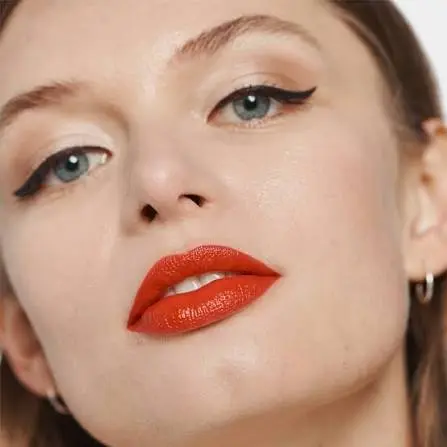
Warm-based reds, including brick red and warm true red, tend to be the safest and most consistently flattering choice for lipstick for olive undertones across most leans and depths. Cooler, blue-based reds can still work, particularly on neutral-leaning or cool-leaning olive undertone, but they benefit from swatching first, since a strongly cool red can occasionally create a slightly grey effect at the lip line. Checking how a red shade affects the surrounding skin, rather than just looking at the lipstick alone, is the simplest way to confirm whether it leans too cool for a specific olive undertone.
Lipstick Shades to Avoid
Cool, blue-based pale pinks and baby pinks tend to clash most consistently with olive undertone, often reading as ashy or washed out rather than flattering. Very sheer, cool-toned nudes marketed as “universal” frequently disappoint on olive skin as well, since that labeling usually assumes a pink-beige base that does not account for olive’s green cast. Bright coral-orange and neon fuchsia shades can also clash, either amplifying the yellow-green in the skin or creating a jarring, disconnected contrast.
Best Finishes for Olive Undertones
Satin and cream lipstick finishes tend to be the most forgiving choice for olive undertones, since they add just enough sheen to prevent color from looking flat without emphasizing texture or dryness. Matte finishes deliver the truest, most saturated color payoff, which makes them a strong choice for bold berries and reds, though they can highlight any natural unevenness in lip texture or pigmentation if lips are not properly prepped beforehand. Sheer and tinted formulas let natural lip pigmentation show through more, which works well in berry and rose shades but can look less predictable in very light nude tones.
How to Swatch and Test Lipstick Correctly
Testing a lipstick shade on the inner wrist or arm rarely reflects how that same shade will look on the face, since undertone and pigmentation can differ noticeably between these areas. Swatching along the jawline in natural daylight gives a far more accurate read, since it shows how the shade interacts with both skin undertone and the transition zone near the lips. Wearing a sample shade for a full day, checking it in both morning and afternoon light, also helps confirm whether a formula holds its intended color or shifts as it wears, which matters more for olive undertones than for most other skin types. For a look at how these same undertone principles apply to another key color category, this guide on blush for olive undertones covers matching shade selection to lean and depth for the cheeks as well.
Frequently Asked Questions
What lipstick shades work best for olive undertones? Warm nude-brown, berry, and brick red shades tend to work well for warm-leaning olive skin, while dusty mauve and cool-leaning berry suit cool-leaning olive undertones better.
What is the best nude lipstick for olive undertones? Warm caramel, tawny brown, and terracotta-rose nudes tend to perform best, since generic pink-beige nudes often read flat or grey against olive undertones.
Is berry lipstick good for olive skin? Yes. Berry shades generally work well across most olive leans and depths, with deeper berries suiting medium to deep olive undertones and lighter, mauve-leaning berries suiting fair to medium depths.
Can olive undertones wear cool-toned lipstick? Yes, particularly neutral-leaning or cool-leaning olive undertones, though it helps to swatch cool shades first, since a strongly blue-based color can occasionally create a grey effect at the lip line.
Why does my lipstick look different than expected on my lips? Many people with olive undertones also have naturally deeper or purple-toned lip pigmentation, which changes how sheer and light formulas perform compared to how they look in the tube.
What lipstick finish works best for olive undertones? Satin and cream finishes tend to be the most forgiving across shade families, while matte works well for bold colors as long as lips are properly prepped beforehand.
Final Thoughts
Lipstick for olive undertones works best when shade selection accounts for lean, depth, and natural lip pigmentation together, rather than defaulting to one generic nude or berry recommendation for every olive complexion. Warm-leaning olive undertones tend to favor terracotta and brick red, cool-leaning olive undertones lean toward mauve and deeper berry, and depth determines how much pigment saturation is actually needed to show up clearly. Understanding that natural lip pigmentation also shapes how a shade performs removes a layer of confusion that most standard shade guides never address. Once lean, depth, and formula are all working together, lipstick for olive undertones stops being a frustrating guessing game and becomes one of the more straightforward parts of a makeup routine.