
Intro
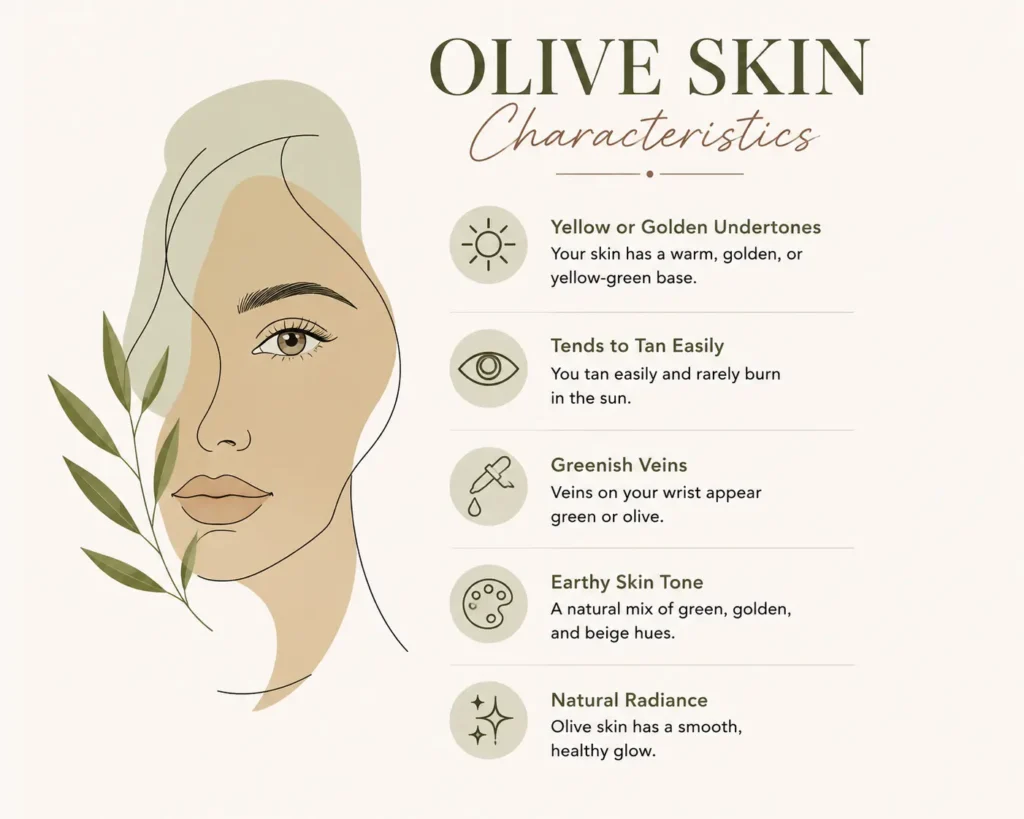
Olive skin characteristics set this complexion apart from purely warm, cool, or neutral skin tones. The most defining trait is a subtle green or gray cast that sits underneath the surface, giving the skin an earthy, muted quality rather than a pink or golden one. People with this complexion often tan quickly, rarely burn, and struggle to find foundation shades that match without turning orange or gray. Olive skin also spans a wide range of depths and appears across many different ethnic backgrounds. Understanding these features of olive skin makes it much easier to choose the right skincare, makeup, and colors.
What Are the Main Olive Skin Characteristics?
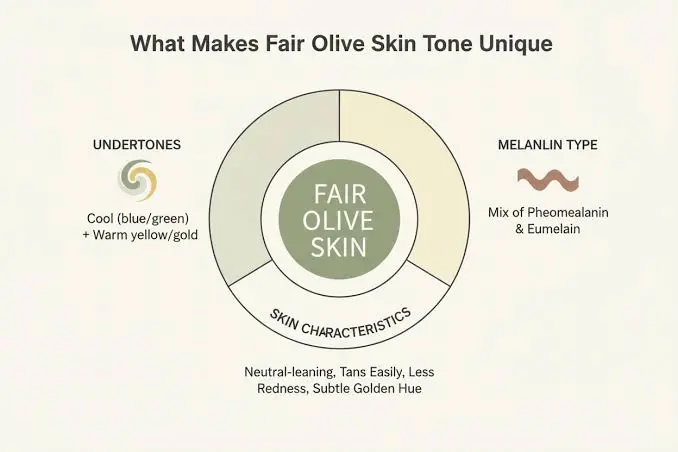
The core olive skin characteristics come down to undertone, sun response, and depth flexibility. Unlike warm or cool skin, which leans clearly toward yellow or pink, olive skin carries a distinct green or gray layer beneath its surface. This layer changes how the skin reacts to foundation, jewelry, and color, which is why so many people with olive skin describe their shopping experience as frustrating.
The Green or Gray Undertone
The green or gray cast is the single most recognizable of all olive complexion traits. It shows up most clearly along the jawline and neck in natural daylight, and it is the reason foundations built for warm or cool skin often look slightly off. This undertone does not change with tanning or seasons, since it sits at a deeper layer than surface color.
A Neutral-to-Warm Base
Alongside the green cast, olive skin usually carries a neutral-to-warm base that blends yellow, gold, and muted tones. This combination is what allows both warm earthy colors and cooler jewel tones to look good on the same person. It is one of the more flexible olive skin characteristics, since it rarely locks someone into a single color family.
Common Features of Olive Skin
Beyond undertone, several other physical features of olive skin show up consistently across people with this complexion. These traits affect everything from sun safety to daily skincare routines, so recognizing them early helps build better habits.
Tans Easily and Rarely Burns
One of the most practical olive skin characteristics is how the skin reacts to sun exposure. Higher natural melanin content means the skin tends to darken gradually instead of turning red or blistering. This does not mean sun protection can be skipped, since UV damage still builds up beneath the surface even without visible burning.
Prone to Oiliness
Many people with olive skin notice their skin runs slightly oilier than average, especially through the T-zone. This is simply a common feature of olive skin rather than a flaw, and it often means the skin ages a little more slowly since natural oils help maintain moisture. A gentle, non-stripping cleanser usually works better than harsh, oil-removing products.
Works With Both Gold and Silver Jewelry
A smaller but well-known trait is how olive skin pairs comfortably with both gold and silver jewelry. Warm or cool skin tends to favor one metal clearly over the other, but the balanced undertone in olive skin allows both to look flattering. This single detail is often one of the fastest ways people first notice their own olive complexion traits.
Olive Skin Characteristics Across Different Depths
Olive skin is not one fixed shade. It ranges from light to deep, and the exact characteristics can shift slightly depending on where someone falls on that spectrum.
Light Olive
Light olive skin carries a fair base with a faint green or gray cast layered on top. It is often mistaken for a plain neutral or fair complexion until compared side by side with true warm or cool skin. People with light olive skin tend to notice the green cast most clearly in winter, when less sun exposure is present.
Medium Olive
Medium olive is the most commonly recognized version of this complexion, and it carries a clear balance between golden warmth and the green-gray undertone. This is the depth most beauty guides picture when they describe classic olive skin characteristics. Foundation matching tends to be slightly easier here, since more brands offer options in this middle range.
Deep Olive
Deep olive skin combines richer brown pigment with the same underlying green-gray cast found at lighter depths. The undertone can still lean either warm or cool, so two people with deep olive skin may still need different foundation shades. Higher melanin at this depth offers more natural UV buffering, though daily sunscreen remains just as necessary.
How to Identify Olive Complexion Traits at Home
Confirming whether a complexion truly shows olive skin characteristics does not require professional tools. A few simple, well-known tests can offer a strong indication at home.
The Vein Test
Looking at the veins on the inner wrist under natural daylight is the most common way to check for olive complexion traits. Veins that look distinctly green, or a mix of green and blue, usually point toward an olive undertone. Purely blue veins tend to suggest a cooler undertone instead, without the same green cast.
The Foundation Test
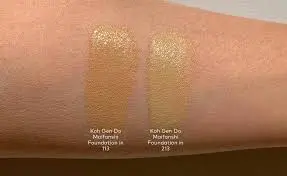
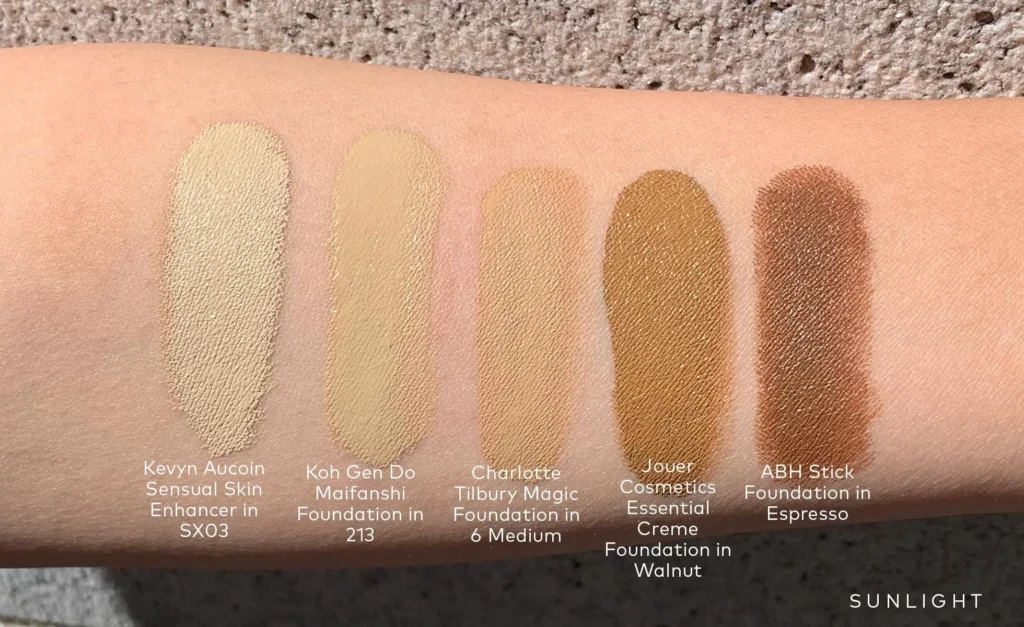
Foundation shopping often reveals olive skin characteristics before any deliberate test does. Warm shades tend to oxidize and turn orange, while cool shades can look pink or ashy, and even neutral shades sometimes still feel slightly off. This gap is a strong sign that a foundation labeled specifically for olive or neutral-olive undertones will fit better.
The White vs. Off-White Test
Holding a pure white fabric and an off-white or ivory fabric near the face can also help confirm these features of olive skin. Skin that looks better against off-white usually leans warmer, while skin that looks equally good against both suggests a more balanced, olive-leaning undertone. This test works well alongside the vein and foundation checks rather than as a stand-alone method.
Olive Skin Characteristics and Ethnic Background
Olive skin characteristics appear most frequently among people of Mediterranean, Middle Eastern, South Asian, and Latin American descent, though the complexion is not limited to any single group. It can also appear in East Asian, North African, and mixed-heritage populations, since undertone is influenced by genetics rather than geography alone. This wide distribution is part of why olive skin resists being placed into one narrow ethnic category. Recognizing this helps avoid the common mistake of assuming olive skin only belongs to one region or background.
Common Skin Concerns Linked to Olive Skin Characteristics
Every complexion comes with its own set of common concerns, and olive skin is no exception. Two issues in particular show up often enough to be considered part of the broader picture of olive skin characteristics.
Hyperpigmentation
Higher melanin activity means olive skin can develop stubborn dark spots after acne, cuts, or prolonged sun exposure. These marks often take longer to fade compared to lighter skin tones, which makes prevention more effective than correction. Daily broad-spectrum sunscreen and gentle, consistent use of brightening ingredients like vitamin C or niacinamide can help manage this tendency.
Oiliness and Dullness
Because olive skin often runs on the oilier side, it can also develop a dull or congested look if pores become clogged. Regular but gentle exfoliation, using mild acids rather than harsh scrubs, tends to work best for keeping the surface clear without triggering more pigmentation. Lightweight, non-comedogenic moisturizers also help balance oil production instead of stripping the skin.
How These Characteristics Shape Makeup and Skincare Choices
Once someone understands their own olive skin characteristics, choosing products becomes far less like guesswork. Both foundation formulas and color palettes work differently on olive skin than they do on strictly warm or cool complexions.
Foundation Matching
Foundations labeled neutral, olive, or golden-olive tend to perform best, since they account for the green-gray cast rather than fighting against it. Swatching along the jawline in natural daylight and waiting several minutes before judging the shade helps catch oxidation before it becomes a problem. For a deeper look at where this undertone comes from and how it is defined, this guide to olive skin tone meaning breaks down the origin of the term in more detail.
Color Palette Fit
Earthy tones, muted jewel colors, and warm neutrals tend to flatter olive skin most consistently, while overly bright neons or icy pastels can clash with the undertone. This flexibility is one of the more enjoyable olive complexion traits, since it opens up a wider color range than many other skin tones allow. Testing new colors in natural light remains the simplest way to confirm a good match.
Frequently Asked Questions
What are the main characteristics of olive skin? The main olive skin characteristics are a green or gray undertone, a neutral-to-warm base, easy tanning with little burning, and a tendency toward oiliness.
Is olive skin the same as tan skin? No. Tan skin describes surface depth, while olive skin characteristics describe the undertone layered beneath that depth, so the two are separate qualities.
Why is my foundation always the wrong shade on olive skin? Standard warm or cool foundations often oxidize orange or look ashy on olive skin because they are not formulated for its green-gray undertone.
Does olive skin age differently? Olive skin often shows fewer fine lines earlier due to natural oil production and higher melanin, though it remains prone to hyperpigmentation and sun damage.
Can olive skin be light in depth? Yes. Olive skin characteristics can appear at light, medium, or deep depths, since undertone and depth are two separate traits.
Which skincare concerns are most common with olive skin? Hyperpigmentation and oiliness are the two concerns most closely linked to olive skin characteristics, both of which respond well to consistent SPF and gentle exfoliation.
Final Thoughts
Recognizing olive skin characteristics comes down to a few consistent signals: a green or gray undertone, a tendency to tan rather than burn, a slightly oilier texture, and a flexible base that works with a wide color range. These features of olive skin show up across many depths and ethnic backgrounds, which is part of why this complexion resists a single, narrow definition. Once these traits are identified through simple tests like the vein or foundation check, choosing the right skincare and makeup becomes far more straightforward. Understanding these olive complexion traits is really the first step toward working with the skin instead of guessing against it.