
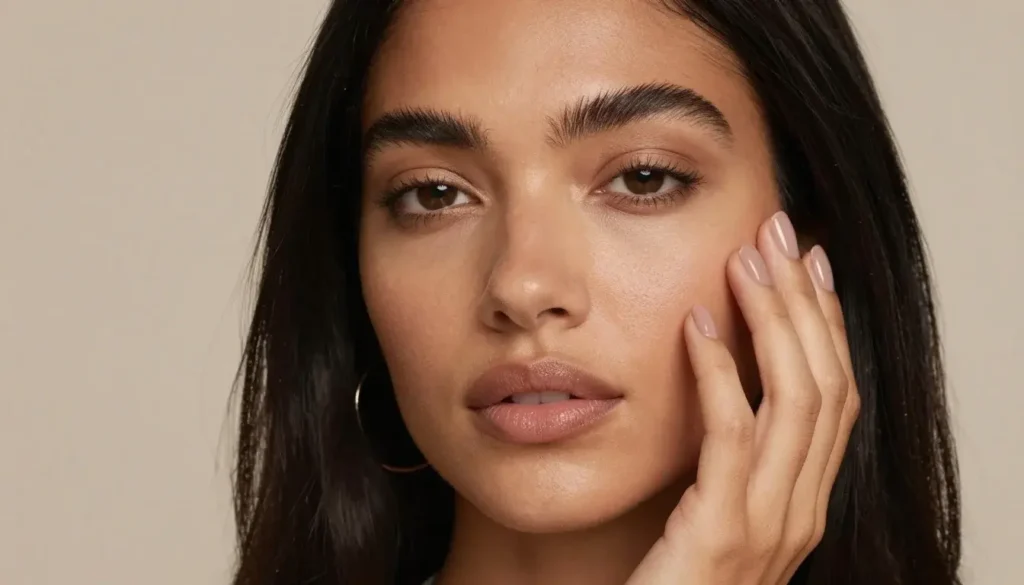
The short answer to olive undertone vs warm undertone is that they are not the same thing, even though they get confused constantly. Warm undertone describes a golden or peachy base, while olive undertone adds a distinct green or grey-green cast that can sit on top of a warm, cool, or neutral base underneath it. This mix-up is one of the most common sources of wrong foundation shades and mismatched color advice in beauty content. This guide breaks down exactly what separates the two, how to test which one you actually have, and why so much beauty advice gets this comparison wrong in the first place.
Table of Contents
Olive Undertone vs Warm Undertone: The Quick Answer
Warm undertone means your skin has a yellow, golden, or peachy base beneath the surface, with no additional color cast layered on top. Olive undertone means your skin has a green or grey-green cast on the surface, which can sit above a warm, cool, or neutral base. In practice, this means every olive undertone technically has a warm, cool, or neutral component underneath it, but not every warm undertone has the green olive quality on top. Confusing the two usually means overlooking this second layer entirely.
What Is a Warm Undertone?
A warm undertone is a skin base that leans yellow, golden, or peachy, with no green or grey cast added on top. People with warm undertones typically tan easily, rarely develop a stark red burn, and tend to look most flattering in gold jewelry rather than silver. Earthy colors like rust, mustard, terracotta, and warm reds usually complement this undertone well, while icy or stark cool colors can make warm-toned skin look slightly washed out by comparison.
Foundation shopping for a pure warm undertone is usually more straightforward than for an olive undertone, since most mainstream “warm” or “golden” labeled shades are formulated with this base in mind. The main risk is picking a shade with too much orange or yellow pigment, which can oxidize into an unnatural cast after a few hours of wear. Testing on the jawline in natural daylight and checking back after 30 to 60 minutes is the most reliable way to confirm a genuine match.
In seasonal color analysis systems, a pure warm undertone typically aligns with the Spring or Autumn seasonal categories, depending on depth and clarity. This is a useful reference point because it highlights something the olive undertone vs warm undertone comparison often misses: warm undertone alone does not carry the green cast that pushes many olive-warm individuals toward the Autumn categories specifically rather than Spring. Understanding this seasonal link can help explain why some warm-toned advice feels slightly off for someone who is actually warm-olive rather than purely warm.
What Is an Olive Undertone?
An olive undertone is defined by a green or grey-green cast on the skin, which sits separately from whatever warm, cool, or neutral base lies underneath it. This means olive is best understood as a quality layered on top of one of the other three undertone categories, rather than a completely separate fourth option with no relationship to warm, cool, or neutral at all. Olive undertones tend to tan easily and rarely burn, similar to warm undertones, which is part of why the two get lumped together so often.
The green cast in olive skin is what makes it behave differently from a pure warm undertone in practice, even when the underlying base is warm. Foundations formulated purely for warm undertones often contain yellow or orange pigment that clashes with this green cast rather than working with it, producing an orange or muddy result that a genuinely warm-undertone person would not experience with the same product. This single difference, the presence or absence of that green layer, is the entire basis of the comparison this guide is built around.
Olive undertones are frequently associated with Mediterranean, Middle Eastern, South Asian, and Latin American heritage, though they appear across many other backgrounds as well, including East Asian and Eastern European skin. Pure warm undertone, by contrast, is not tied to any particular ethnic association in the same way, since it appears broadly across most populations regardless of background. This is worth noting because ethnicity-based assumptions are one of the more common shortcuts people use when guessing at undertone, and they hold up far less reliably for olive undertone than the assumption itself often suggests.
Why Olive Gets Mistaken for Warm
Olive gets mistaken for warm undertone constantly, mostly because warm-leaning olive skin is the most visible and most marketed version of olive skin in mainstream beauty content. A warm-olive person tans into a golden, sun-kissed color that looks similar on the surface to a pure warm undertone, which makes the underlying green cast easy to overlook unless you are specifically looking for it. This surface-level similarity is exactly why so many people with a genuinely olive undertone get told they are simply warm and never revisit that assumption.
This is one of the most common misconceptions in the entire olive undertone conversation, and it is worth understanding in more depth than a single paragraph can cover. A full breakdown of this exact confusion, along with several other persistent myths, is available in our guide to common myths about olive undertones, which addresses this mix-up as the single most repeated misconception in the space.
Olive Undertone vs Warm Undertone: Side-by-Side Comparison
Seeing the two undertones laid out directly against each other usually resolves the confusion faster than reading separate descriptions of each one. The table below summarizes the core differences across the tests and categories most people actually use to shop for makeup and colors.
| Category | Warm Undertone | Olive Undertone |
|---|---|---|
| Surface cast | Golden, peachy, yellow | Green or grey-green, layered over warm, cool, or neutral |
| Vein color | Greenish, without a blue-green mix | Blue-green or teal mix |
| Jewelry test | Gold looks more flattering | Gold usually flatters, but response can vary by subtype |
| Sun reaction | Tans easily, rarely burns | Tans easily, rarely burns |
| Best colors | Rust, mustard, terracotta, warm red | Earthy tones plus jewel tones like emerald and sapphire |
| Foundation risk | Oxidizes orange if too much yellow pigment | Oxidizes orange or turns ashy depending on base underneath |
| Common mix-up | Rarely mistaken for olive | Frequently mistaken for warm |
The overlapping sun reaction and jewelry test results are exactly why relying on a single test rarely settles the comparison. Foundation behavior and the vein test tend to be the most useful differentiators, since the green cast in olive skin interacts with pigment differently than a pure warm base does.
Testing Methods: How to Tell If You’re Olive or Warm
No single test reliably separates olive from warm undertone on its own, which is why combining two or three methods gives a far more dependable answer. Each test below carries a specific caveat for this particular comparison, since olive and warm undertones can produce genuinely similar results on some of them.
The Vein Test (and Why It Confuses These Two)
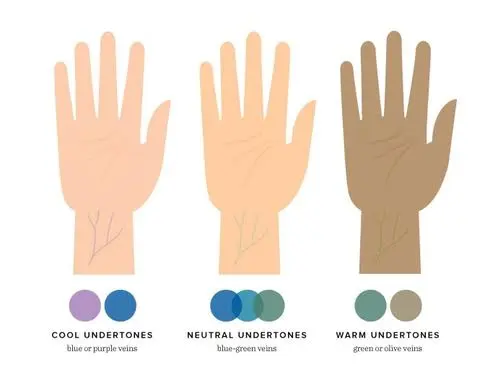
The vein test checks whether the veins on your wrist look blue-purple, green, or a mixed blue-green in natural light. A pure warm undertone typically shows veins with a greenish cast and no blue mixed in, while an olive undertone typically shows a blue-green or teal mix that a pure warm undertone does not usually produce. This distinction is subtle enough that it is easy to misread, especially since some beauty content inconsistently describes warm undertone veins as simply “green” without clarifying that a genuine blue-green mix points toward olive instead.
The Jewelry Test
Hold both gold and silver jewelry against bare skin in natural light and compare which one looks more flattering. Warm undertones almost always look better with gold, with little ambiguity in the result. Olive undertones also tend to favor gold in most cases, but the response can vary depending on whether the underlying base leans warm, cool, or neutral, which makes this test less conclusive for olive than it is for warm.
This is one of the clearest examples of why relying on jewelry preference alone will not settle the olive undertone vs warm undertone question. Two people who both prefer gold over silver can still have entirely different undertones once the green cast is factored in, since gold flatters warm-olive, neutral-olive, and pure warm skin for slightly different underlying reasons. Treat a strong gold preference as confirmation that you are not purely cool, rather than proof that you are specifically warm rather than olive.
The White Paper Test
Hold a plain white sheet of paper next to your bare face in natural daylight and observe how your skin reacts against it. A warm undertone typically looks golden or yellow next to the white paper, with no green quality present. An olive undertone typically shows a visible green or grey-green tint against the same white paper, which is the clearest single signal separating the two categories.
The Foundation Oxidation Test
Apply a foundation labeled “warm” or “golden” and check how it looks after 30 to 60 minutes of wear. A genuinely warm undertone usually holds that golden color reasonably well, aside from normal minor oxidation. An olive undertone often sees the same foundation shift toward orange more noticeably, since the green cast reacts with the yellow or orange pigment in a way a pure warm undertone does not experience to the same degree.
Running this test twice, once with a “warm” labeled shade and once with an “olive” or “neutral-olive” labeled shade at the same depth, gives an especially clear result. If the olive-labeled shade holds its color noticeably better than the warm-labeled one over the same wear time, that is strong practical evidence of a genuine olive undertone rather than a pure warm base. This side-by-side product comparison tends to be more convincing for most people than any single visual test, since it reflects how the undertone actually behaves under real, all-day conditions.
Which Undertone Is More Common: Olive or Warm?
Pure warm undertone is generally considered more common worldwide than olive undertone, simply because it appears broadly across nearly every population without the additional green cast that defines olive. Olive undertone, and specifically warm-olive, is common enough within certain regions and heritages that it can feel like the majority experience there, even though it represents a smaller share of undertones globally. This is part of why undertone advice can feel contradictory depending on where it was written or who wrote it, since a warm-undertone-focused guide written without olive in mind will naturally underserve olive-undertone readers.
This difference in prevalence is not a reason to treat olive undertone as a rare exception that does not need its own guidance. It is common enough, and different enough in practice, that treating it as a variation of warm undertone rather than its own category leads directly to the mismatched foundation and color advice this guide is trying to correct. Knowing that both categories are genuinely common, just unevenly distributed, is more useful than trying to rank one as more “normal” than the other.
Can You Have Both Olive and Warm Characteristics?
Yes, and this is actually the most common real-world result rather than an exception. A warm-olive undertone has a genuinely warm, golden base underneath, with the green olive cast layered on top of it, which means it shares real characteristics with both categories at once. This is different from being purely warm or purely olive, and it explains why so many people feel like they partially fit both descriptions when reading undertone guides.
Recognizing this overlap is more useful than trying to force yourself into one category or the other. If your test results consistently show warm-leaning signals (gold jewelry, golden foundation success, warm color preference) alongside a visible green cast in the vein and white paper tests, warm-olive is a more accurate description than either “warm” or “olive” alone. The practical guidance that follows for olive undertone generally applies to warm-olive as well, since the green cast is still present and still affects product performance.
Makeup and Color Differences Between Olive and Warm Undertones
Warm undertones generally do well with foundation labeled “warm,” “golden,” or “honey,” since these formulas are built for a base with no green cast to work against. Olive undertones, including warm-olive, tend to perform better with shades specifically labeled “olive,” “neutral-olive,” or “golden-olive,” since these account for the green cast that a standard warm formula ignores. This single labeling difference is responsible for a large share of the foundation frustration reported by people with olive undertones who have been shopping as if they were simply warm.
Clothing and jewelry choices overlap more than foundation does, since both categories tend to do well in earthy tones and gold jewelry. The clearer difference shows up in richer, more saturated colors: olive undertones, particularly those leaning cool or neutral underneath the green cast, often handle deep jewel tones like emerald, sapphire, and plum more successfully than a pure warm undertone does. A pure warm undertone tends to stay most flattering within the earthy, golden, and warm-red family, without the same natural pull toward jewel tones that olive undertones often have.
Blush and bronzer selection also splits along similar lines. A pure warm undertone typically looks most natural in peach, coral, or warm terracotta blush, and in bronzers described as golden or sun-kissed. An olive undertone, by contrast, often does better with a slightly more muted or brick-toned blush, since overly peachy or coral shades can sit oddly on top of the green cast rather than blending into it the way they do on purely warm skin. This is a small but consistent difference that shows up repeatedly once someone starts testing products specifically against their confirmed undertone rather than guessing from general advice.
Frequently Asked Questions
Is olive undertone the same as warm undertone? No. Warm undertone is a golden or peachy base with no additional color cast. Olive undertone adds a green or grey-green cast that sits on top of a warm, cool, or neutral base, which makes it a distinct category even when the underlying base happens to be warm.
Why do people confuse olive undertone with warm undertone? Warm-leaning olive skin tans into a golden color that looks similar on the surface to a pure warm undertone, which makes the underlying green cast easy to miss. This surface-level similarity is the main reason the two get lumped together in casual beauty advice.
Does the vein test tell olive and warm undertones apart? It can, but it requires attention to detail. A pure warm undertone typically shows greenish veins without a blue mix, while an olive undertone typically shows a blue-green or teal mix. This distinction is often described inconsistently across beauty sources, which is why combining the vein test with the white paper test gives a more reliable result.
Can someone have both a warm and an olive undertone? Yes. This is called warm-olive, where a genuinely warm, golden base sits underneath a visible green olive cast. It is a common real-world result rather than a rare exception, and it explains why many people feel like they partially match both warm and olive descriptions.
Which foundation label works better for olive versus warm undertone? Warm undertones generally do well with shades labeled “warm,” “golden,” or “honey.” Olive undertones, including warm-olive, typically perform better with shades labeled “olive,” “neutral-olive,” or “golden-olive,” since these formulas are built to counteract the green cast that standard warm shades ignore.
Do olive and warm undertones wear the same colors well? They overlap significantly in earthy tones and gold jewelry, but olive undertones often handle deep jewel tones like emerald and sapphire more successfully than a pure warm undertone does. A pure warm undertone tends to stay most flattering within earthy, golden, and warm-red color families.
Is olive undertone more rare than warm undertone? Olive undertone is less common globally than pure warm undertone, mainly because warm undertone appears broadly across most populations without requiring the additional green cast that defines olive. That said, olive undertone is common enough within many regions and heritages that it deserves its own dedicated guidance rather than being treated as a rare exception.
Why does my foundation labeled “warm” oxidize orange if I actually have an olive undertone? Foundations labeled purely “warm” are formulated without accounting for the green cast in olive skin, and that green cast reacts with the yellow or orange pigment in the formula over time. Switching to a shade labeled “olive” or “neutral-olive” typically resolves this oxidation issue, since those formulas are built to counteract the green cast directly.
Final Thoughts
The real difference in the olive undertone vs warm undertone comparison comes down to one layer: the green or grey-green cast that olive undertone adds on top of a warm, cool, or neutral base, which a pure warm undertone simply does not have. This single distinction explains why foundation oxidizes differently, why the vein test results diverge, and why olive skin so often gets misclassified as warm undertone in casual beauty advice. Combining the vein test, white paper test, and foundation oxidation test gives a far more reliable answer than relying on tanning behavior or jewelry preference alone, since those two categories overlap the most between olive and warm. Once you know whether that green cast is present, the rest of the comparison- foundation labeling, color choice, and jewelry- tends to fall into place on its own.