
Intro
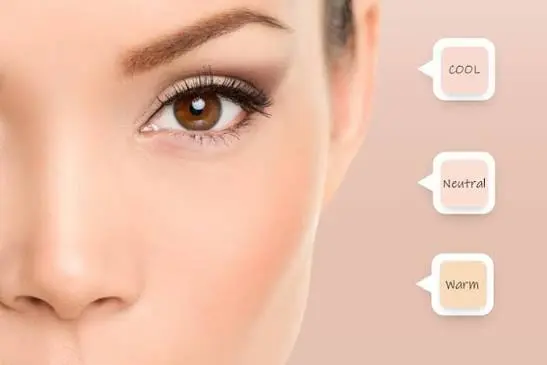
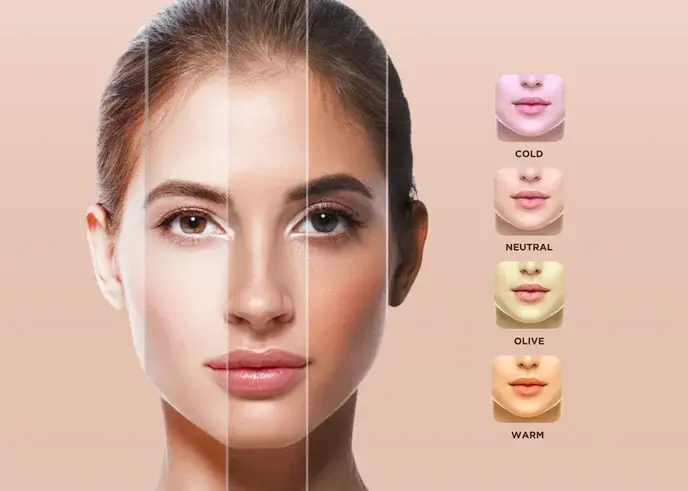
An olive undertone test works best when it combines several signals rather than relying on a single check, since olive skin carries a green-neutral layer that can confuse any one test on its own. This guide walks through four separate tests: the vein test, jewelry test, white paper test, and foundation test, each explained step by step so nothing gets left vague. At the end, a simple point-based quiz pulls all four results together into one clear answer, completely free and without needing to sign up for anything. By the end of this olive undertone test, the goal is a confident result, not just another list of confusing signals.
Table of Contents
Why One Olive Undertone Test Isn’t Enough
A single test often fails on olive skin because the green-neutral base sitting beneath the surface can distort vein color, jewelry contrast, and paper comparisons all at once. This is not a personal failure or a sign of being hard to read; it is simply how this particular undertone interacts with tests built around a single pigment layer. Running all four tests below and comparing the results gives a far more reliable answer than trusting any one test in isolation.
The Vein Test
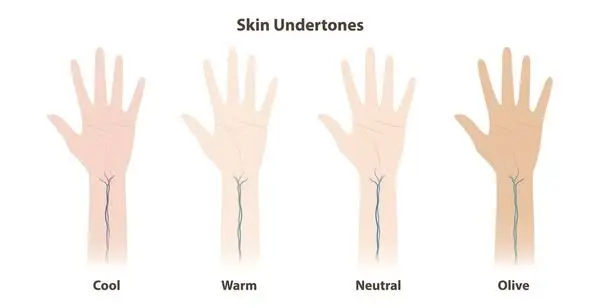
The vein test checks the color of the veins on the inner wrist under natural daylight, since blood vessels tend to reflect undertone fairly consistently.
How to run it: Turn your wrist face-up under a window with natural light, avoiding direct sun or artificial bulbs. Look at the veins running along the inner wrist without any filters, lotion, or makeup nearby.
How to read it: Veins that appear clearly blue or purple usually point toward a cooler undertone. Veins that appear green point toward a warmer undertone. Veins that look blue-green, teal, or shift depending on the angle are common on olive skin and mean this particular signal is inconclusive on its own.
The Jewelry Test
The jewelry test compares how gold and silver look against the skin, since undertone affects how each metal reflects light against the complexion.
How to run it: Hold a piece of clearly warm gold jewelry against one cheek and a piece of clearly cool silver against the other, ideally in natural daylight rather than indoor lighting.
How to read it: If gold makes the skin look more even and alive, that points toward a warmer undertone. If silver brightens the face and reduces dullness, that points toward a cooler undertone. If both metals look equally fine, this is common on olive skin and simply means the signal is not decisive by itself.
The White Paper Test
The white paper test compares the skin directly against a neutral white background, which can reveal a pink, yellow, or greenish cast that is harder to notice in isolation.
How to run it: Hold a plain sheet of white paper or white fabric directly beside the face in natural daylight, without any makeup or tinted moisturizer on the skin.
How to read it: Skin that looks pink or rosy against the white background usually leans cool. Skin that looks yellow or golden usually leans warm. Skin that looks distinctly greenish or muted against the white background is a strong, specific sign of the green-neutral base that defines true olive skin, separate from the warm or cool question entirely.
The Foundation Test
The foundation test is often the most reliable of the four, since foundation pigment has to interact with every layer of the skin at once, including the green-neutral olive base.
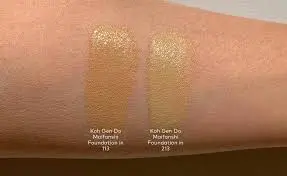
How to run it: Apply a stripe of a warm-leaning shade, a stripe of a neutral or olive-labeled shade, and a stripe of a cool-leaning shade along the jawline, all within your approximate depth range. Use no primer or tinted moisturizer underneath, and view the results in natural daylight after stepping away from the mirror for two to three minutes.
How to read it: The stripe that blends in without a visible edge points toward the closer undertone match. A warm stripe turning visibly orange still suggests a warm-leaning direction, just in the wrong shade or saturation. A cool stripe turning ashy or grey still suggests a cool-leaning direction, again just needing an adjustment in formula rather than a full undertone switch. A stripe that looks muddy or sallow, regardless of warm or cool labeling, usually signals the wrong undertone direction entirely.
Olive Undertone Quiz: Score Your Results
This simple olive undertone quiz turns the four tests above into a point-based score. Answer each question based on what you found, add up the points, and check the result at the end.
1. Vein test result: Green veins = 2 warm points. Blue or purple veins = 2 cool points. Blue-green or teal veins = 1 point to each side.
2. Jewelry test result: Gold looks better = 2 warm points. Silver looks better = 2 cool points. Both look equally good = 1 point to each side.
3. White paper test result: Skin looks yellow or golden = 2 warm points. Skin looks pink or rosy = 2 cool points. Skin looks distinctly greenish = 1 point to each side, plus confirmation of a true olive base.
4. Foundation test result: Warm stripe blends best = 3 warm points. Cool stripe blends best = 3 cool points. Neutral or olive-labeled stripe blends best with no clear warm or cool winner = 1 point to each side.
Add up your total warm points and total cool points separately, then check your result:
- 6 or more warm points, 3 or fewer cool points: Warm-leaning olive undertone
- 6 or more cool points, 3 or fewer warm points: Cool-leaning olive undertone
- Warm and cool points within 2 points of each other: Balanced or neutral-leaning olive undertone
What Your Olive Undertone Test Results Mean
Once the quiz produces a score, translating that result into practical choices is the next step.
Warm-Leaning Olive Results
A warm-leaning result means foundation shades labeled warm beige, golden beige, or warm olive tend to perform best, alongside earthy colors like terracotta, rust, and warm brown in clothing. Gold jewelry and warm metallics like bronze and copper also tend to complement this direction well.
Cool-Leaning Olive Results
A cool-leaning result means foundation shades labeled cool beige, cool sand, or neutral-cool tend to work better, paired with cooler colors like emerald, plum, and slate in clothing. Silver and white-gold jewelry tend to flatter this direction more than yellow gold.
Balanced or Neutral-Olive Results
A balanced result means both warm and cool shades may work reasonably well, though a formula specifically labeled neutral-olive often outperforms either extreme. For a deeper look at building a full skincare and style routine once this result is confirmed, this guide on olive undertone skin walks through a complete, practical system.
What to Do If Your Olive Undertone Test Results Are Mixed
If the quiz score comes out close to even with no clear lean, retesting in stronger, more consistent natural daylight is worth trying before assuming the result is permanently unclear. Focusing more heavily on the foundation test result specifically tends to help, since it is generally the most diagnostic of the four signals when the others disagree. If results remain genuinely mixed even after retesting, treating the undertone as balanced or neutral-olive and choosing products labeled specifically for that category is a perfectly valid, practical conclusion rather than a failure to find an answer.
Frequently Asked Questions
What is the most accurate olive undertone test? The foundation test tends to be the most reliable single test, since foundation pigment interacts with every layer of the skin, including the green-neutral olive base, more directly than veins or jewelry alone.
Why did my vein test and jewelry test give different results? This is common on olive skin, since the green-neutral base can distort both signals differently. Weighing all four tests together, rather than trusting one in isolation, gives a more reliable answer.
Can I have olive skin and still lean warm or cool? Yes. Olive describes a green-neutral base layer, but a separate warm or cool secondary undertone still exists underneath it, which is exactly what this quiz is designed to identify.
What does a greenish result on the white paper test mean? A distinctly greenish cast against white paper is a strong, specific sign of true olive undertone, separate from whether that undertone also leans warm or cool.
Is this olive undertone quiz as accurate as a professional color analysis? It provides a reliable, practical starting point based on well-established identification methods, though a professional color analysis can offer additional nuance for anyone who wants an even more detailed result.
What if my quiz score comes out exactly even? An even score suggests a balanced or neutral-leaning olive undertone, which simply means shopping for neutral-olive labeled products rather than committing strictly to warm or cool categories.
Final Thoughts
An olive undertone test works best as a combination of signals rather than a single quick check, since the green-neutral base in olive skin can distort vein color, jewelry contrast, and paper comparisons individually. Running the vein, jewelry, white paper, and foundation tests together, then scoring the results with the quiz above, gives a far more confident answer than any one method alone. Whether the result lands warm-leaning, cool-leaning, or balanced, that answer translates directly into more accurate foundation shopping and color choices going forward. Retesting in good natural light and leaning on the foundation test as a tiebreaker remains the most reliable way to resolve any results that still feel unclear.